Showing posts with label Writing. Show all posts

Tuesday, March 31, 2015

Planting Your Flag (Author Web Presence) On the Web

 Image credit: NASA

“Where do I plant my flag (set up my author web presence)” is one of the questions I see come up again and again on author loops. What usually follows is a lively discussion about where to set up. Rarely do I see authors talking about what. What are the “must haves” for a solid author web presence?

Much of your web content will be decided by your goals as an author, by the needs of your writing business. An author that writes both fiction and non-fiction will have different content than authors who write only fiction or only non-fiction. The more diverse your writing, the more challenging it will be to clearly establish your author brand. Just like the covers of your book, your web layout and design should provide cues and clues to what you write. So that is the first question to ask yourself:

What do I want visitors to know when they arrive?

Beautifully designed websites that don’t answer this basic question can cause visitors to click away without exploring further. While my website isn’t the sassiest out there, visitors to my site will quickly discover that I’m an author who writes fiction. Because I write in several genres (a branding nightmare), my tagline is simple and brand-inclusive: Pauline’s Perilously Fun Fiction.

I tried doing fun things with my navigation and realized that confusing readers about where to find out more was not in my best interests. So my navigation is simple and based on this question:
How do I help readers find out more about me and my books?

I found this article on Dear Author to be very helpful. It was written in 2006, so all the information is not relevant in this fast-changing, internet world. I took what fitted into my business plan and brand and integrated it into my website. At the very least you should have:
  • A complete list of books (and I still maintain a printable list, in case a reader wants to carry it to the library or bookstore) 
  • Book order/availability/formats available 
  • Excerpts and/or extra or free content
  • Where to buy and what formats are available 
  • What’s next and sign-up for ezine (Mine is for release information only, but some authors do weekly or monthly ezines)
  • Bio (depending on your business goals, you should have 2-4 bios in varying lengths)
  • Contact info 
  • Social media/blog links
The second level of information, which also depends on your business goals, is your press area. In my press room I have:  
  • Two bios (should have more) 
  • Links to larger cover art files 
  • Links to photos of me that can be used 
  • Permissions information for cover art/photo usage by blogs and press 
  • Press kit (what this includes is dependent on your business goals. A good resource for a press kit is Joan Stewart)
One thing Dear Author mentions is that key information should be no more than two clicks away. They also hate sites that are too cute, too busy or use backgrounds that make the text hard to read.
And last, but hardly least, it’s better to have no site than one that is never up-to-date. Don’t be like the NASA moon mission and leave your flag alone and lonely. Like the worlds where we set our books, keep your web “world” well populated.

What content do you consider key for your website? As a reader? As an author?  Pet peeves and pet loves?

Pauline Baird Jones is the award-winning author of sixteen novels of science fiction romance, action-adventure, suspense, romantic suspense and comedy-mystery, as well as releasing several short story anthologies. Girl Gone Nova and Out of Time were EPIC Book Award winners. Her eighth novel, The Key won an Independent Book Award Bronze Medal (IPPY) for 2008 and is a 2007 Dream Realm Awards Winner. With the closing of L&L Dreamspell, Pauline has opted to independently publish. Core Punch is her latest release and the first book in her new Uneasy Future series. Originally from Wyoming, she and her family moved from New Orleans to Texas before Katrina.

You can find her at the following places: Website   Blog   Facebook   Twitter  Google+ LinkedIn Goodreads Amazon Author Page


Tuesday, November 25, 2014

Descripturbation: How to (and How Not to) Describe Characters

Hello hello!

Today I'm going to talk about one of the thorniest and most often-ridiculed issues in writing--character descriptions. Some authors describe every pimple, dimple, dent, and wrinkle of lace; some basically avoid description at all, which can leave readers feeling as though the characters are no more than wooden silhouettes with "Protagonist's Name Here" taped to them.

So, what does too much detail look like? 

Women's clothes often get the brunt of this. The men's clothes in the same works are often less elaborate, but have a look at the paragraph below.

"Her blue paisley dress had delicate puce and chartreuse ribbons on the puffed sleeves. The layered chiffon skirt was hooped, and numerous petticoats trimmed in yellow lace spilled out from beneath its voluminous edges."

Now, that's ugly, in many ways. There are too many adjectives, some passive voice, and the actual dress combination is pretty hideous. But fancy steampunk/Victorian dresses are easy to ridicule. What does overdescription with a male character in a more contemporary setting look like?

"His perfect nose was Euclidean and his brow was high and fair. He had deeply-set brown eyes with smooth lids, and his eyes twinkled under dark brows and short black lashes. His mouth was slender-lipped and his smile, very wide. His dimples dotted golden cheeks and the creases of his grin reached almost to his dark sideburns. Slick, anthracite hair that had been gelled into perfection flopped insouciantly off to the side.

His neck was slim but strong and his golden skin showed through the opening of his blue and white plaid button-down shirt, a real second-hand item, not a designer look-alike. His Gotye t-shirt had stylized doves and hands opening on it, and his jeans--which were fashionably worn and ripped, but had obviously been broken in--had a dove embroidered on the pocket as well. I stared at his Converse sneakers and fell in love."

As a friend said, "I just think it's kinda awesome that someone who writes so well can just as easily write so BADLY at the drop of a hat."

These two paragraphs are excessively detailed, to an irritating extent, because whatever else was happening in the scene stops DEAD to let the description show itself out.

"His brown eyes sparkled as he grinned at me. He ruffled his slick black hair and leaned back, his band t-shirt peeking through a plaid button-up."

This rewrite is a bit simpler, but it still gets the feeling across without stopping the action dead. It also makes the description more active, contextualizing his eyes and hair with expressions and an action.


What about insufficient detail?


My personal prejudice is that "less is more", but if a story is full of lush descriptions elsewhere, it's probably okay to let yourself go in the character descriptions. For first drafts, it's also okay to go a bit bananas--you can always cut things later. For those of us who write fantasy and sci fi, there are extra challenges, because the books exist in unique universes.

That said, it's often a good idea to trust the reader. They can imagine things, they know how tropes work, and it's okay to skim over descriptions a bit when referring to something that should be ordinary. Wastebaskets, for example, or toilets. Focus on what's different, not just what's the same. For both characters and the setting, it's often wise to add bits of description throughout the book, sprinkling them in. Using relative descriptions can also be helpful in keeping the reader immersed. One of the best things you can do is make a description active, so that the character interacts with their environment rather than being set apart from it. Here's an example.

"She smiled and stretched her long, tanned limbs. She was tall and stringy, and her grey-streaked black hair gleamed like steel in the light of the twin suns."

We know she's on an alien planet--possibly one with low gravity--and that she's an older woman already. It's not a lot, but it can go a long way. But that's the easy stuff--what about specific character description issues?

Source. This is a great resource.

How do we describe diversity without having to say, 'this character is black or Japanese'?


The best thing you can do is get yourself a colour palette of skin tones. Dark skin comes in many, many shades--there are some incredible resources to explain some of those shades.

"Her reddish-brown skin glowed in the sun, and she squinted, her full lips curving into a smile. She unholstered her pulse rifle and trained it on the scruff-rat leisurely, then fired."

Now, you could describe her skin as 'chocolate' coloured, but that kind of description has really fallen out of use. The problem with food-like descriptions is that it's othering and a bit creepy when all protagonists are edible. It's fine in small doses--and I've seen black authors use "almond eyes and chocolate skin" as descriptors, and "creamy" or "milky" skin do get used to describe white characters, but Asian characters don't have "teriyaki or sesame skin" and Latino characters don't have "corn tortilla" skin, Nor do, say, First Nations people have "pemmican complexions". The problem is that people are sometimes unaware that the way they describe others is fetishizing (which makes a person into an object) or just plain absurd.

When it comes to describing eye shape and colour, "almond" eyes are used a lot for Asian characters, but this has become contentious and annoying for the same reason mentioned above. The jury's out on good ways to describe monolids and epicanthic folds, but mentioning 'angled' eyes, 'crinkled' eyes, 'smooth' lids, deeply-set, or teardrop-shaped eyes are all possible choices. It's better to talk to someone from the ethnic background you're trying to describe if you're not sure. As always, research is your friend.


Any final words?


We'll all make mistakes. That's life, and that's writing. Experiment and do research, and run things by friends who can mock you safely (without being too mean) if you're worried that something sounds ridiculous. And, of course, there's always asking your editor or beta readers.


***
Thanks for dropping by the nest once again. Leave your comments, rebuttals, and vehement agreements below. Don't miss any of the phuquerie. Find Michelle on TwitterFacebook, and on Tumblr, and find her work on Amazon. Check back on the blog to see when one of the irregular posts has careened onto your feed. This is the one and only SciFiMagpie, over and out! 

Thursday, September 11, 2014

SFRB Recommends #23: The First 50 Pages by Jeff Gerke #writing #craft


The First 50 Pages: Engage Agents, Editors and Readers, and Set Up Your Novel for Success by Jeff Gerke

Book Blurb

Whether you’re looking to get published or just hoping to hook your reader, first impressions are vital. Compelling opening scenes are the key to catching an agent or editor’s attention, and are crucial for keeping your reader engaged.

As a writer, what you do in your opening pages, and how you do it, is a matter that cannot be left to chance. The First 50 Pages is here to help you craft a strong beginning right from the start. You’ll learn how to:
  • introduce your main character
  • establish your story world
  • set up the plot’s conflict
  • begin your hero’s inner journey
  • write an amazing opening line and terrific first page
  • and more
This helpful guide walks you through the tasks your first 50 pages must accomplish in order to avoid leaving readers disoriented, frustrated, or bored. Don’t let your reader put your book down before ever seeing its beauty. Let The First 50 Pages show you how to begin your novel with the skill and intentionality that will land you a book deal, and keep readers’ eyes glued to the page.

Recommendation

This is a great book and not just for the first fifty pages. Jeff spends the first part of the book giving us an inside view of what it’s like to be an acquisitions editor. He outlines the whole process and tells us what is guaranteed to kill your chances of getting a deal. The rest of the book is spent going over what every author needs to know about the first fifty pages and what they need to accomplish. He uses a lot of examples to show how and why things work (or not). I like this book because it touches on the entire novel experience, the three acts, and what you should know about your characters before you even start writing.

This book recommendation is brought to you by Sabine Priestley.

Author site: Jeff Gerke

Thursday, August 28, 2014

SFRB Recommends #22: Beginnings, Middles & Ends by Nancy Kress #writing #craft

Beginnings, Middles & Ends by Nancy Kress

Book Description

By demonstrating effective solutions for potential problems at each stage of your story, Nancy Kress will help you...

  • hook the editor on the first three paragraphs 
  • make--and keep--your story's "implicit promise"
  • build drama and credibility by controlling your prose. 

Dozens of exercises help you strengthen your short story or novel. Plus, you'll sharpen skills and gain new insight into...

  • the price a writer pays for flashbacks
  • six ways characters should "reveal" themselves
  • techniques for writing--and rewriting 

Let this working resource be your guide to successful stories--from beginning to end.

Recommendation

This is one of the books I think *every* writer should read at least once. Beginning, middle and end. Three things every book needs. Sounds simple, right? Anyone who’s ever tried to write a book knows how deceptive that statement is. This book walks you through every stage, highlights common pitfalls and gives you the tools you’ll need to bring your book to life.

You can purchase this book on:
Amazon US
Amazon UK

Recommendation brought to you by Sabine Priestley.

Author site: Nancy Kress - Science Fiction and Fantasy Author

Tuesday, July 15, 2014

Pinterest and Cover Art

Releasing September 12th!
I've been involved in various writer's groups for almost eight years now. When Pinterest debuted there was a lot of chatter about how authors can use it to reach readers. I'm still not sure reaching new readers via Pinterest is a valid strategy for an author, but I have found uses for it.

Originally I wrote historical romance, and I've always had a thing for 19th century clothing. I have nine boards of historical fashion, all but one of them for the 19th century.

When I started writing SFR in 2012 I knew I was creating a world I needed visuals for. Once I knew what Lok'ma looked like I spent a couple hours hunting through Google Images and various photo sites looking for landscape shots that matched my vision of the planet.

As Pinterest evolved and I watched more of my writing friends sign their first contracts, those who had jumped on Pinterest had an advantage in one important area. Cover art. They had boards to go with their manuscripts so the art department could see what the writer sees.

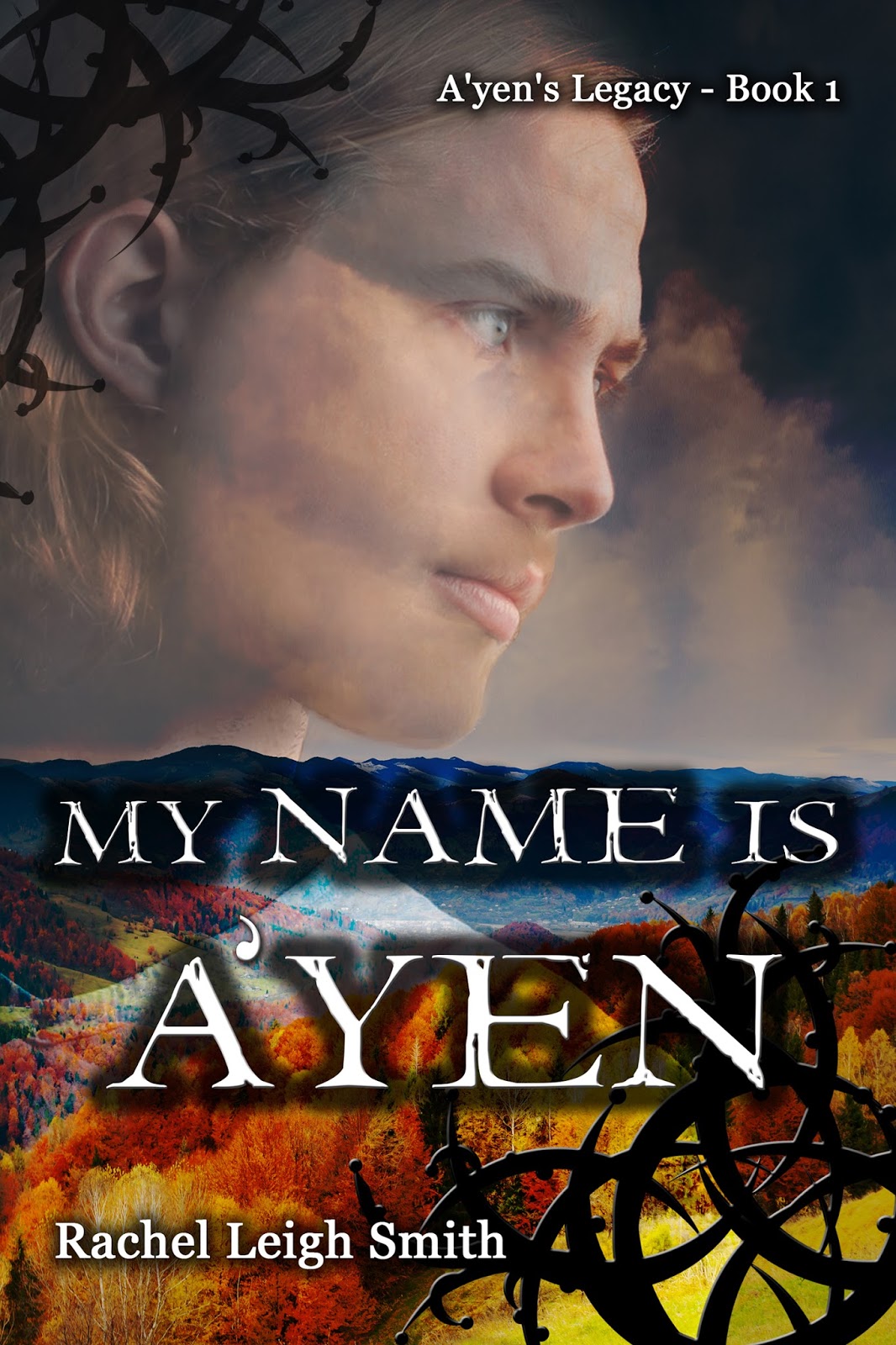
Last month it was my turn to do cover art. I found a graphic artist I like and started talking with her about what I wanted my cover to be. It's inspired by a pre-made she had on her site that I liked the composition of. I sent her the link to the My Name Is A'yen Pinterest board so she'd know how I envision the planet the story takes place on. And you know what?

SHE NAILED IT! Pinterest helped give me the cover of my dreams.

Each book in A'yen's Legacy has a Pinterest board, with how I see the characters, important items and places, and the marking patterns that are a crucial part of the experience. You can follow me if you like.

Will I ever find new readers using Pinterest? Don't know. Don't care. All I care about is I got the cover of my dreams out of it.


Rachel Leigh Smith is a romance writer, a geek, and a Southern belle. She lives in Louisiana with a half-crazed calico named Zoe. When not adding words to an SFR novel she’s reading paranormal romance or crafting while watching some type of SF on TV. Her debut novel, My Name Is A'yen, will be out in September. She also blogs sporadically at www.rachelleighsmith.com and hangs out on Facebook.


My Name Is A'yen: Releasing September 12, 2014.
They've taken everything from him. Except his name.
The Loks Mé have been slaves for so long, freedom is a distant myth A'yen Mesu no longer believes. A year in holding, because of his master's murder, has sucked the life from him.
Archaeologist Farran Hart buys him to protect her on an expedition to the Rim, the last unexplored quadrant. Farran believes the Loks Mé once lived on the Rim and she is determined to prove it. And win A'yen's trust. But she's a breeder's daughter and can't be trusted.
Hidden rooms, information caches and messages from a long-dead king change A'yen's mind about her importance. When she's threatened he offers himself in exchange, and lands on the Association's radar. The truth must be told. Even if it costs him his life. 

Tuesday, May 27, 2014

Writing Influences by Patricia Green


My all-time favorite SF book is Ringworld by Larry Niven. And although the romance is thin, the plot, characters and settings are fulsome. I don't know what inspired the author, what genius spark of intelligence lit up Niven's brain. I do know he was a mathematician during his college years, and loves to delve into theoretic physics in his books. It's that background that informs his writing, and, I believe it's what allowed him to build the incredible universe he did with his Ringworld series.

When I approach writing SF fiction, I don't have a background in math or physics. I took bonehead classes in physics, chemistry, biology, and math. Consequently, I have to do a lot of research when building my worlds. I try not to dip into territory in which I will surely make errors, but I rely on current technology and then imagine where that tech might take us in one hundred, even two hundred years. Although some of it might be magical-seeming, I think science grinds through at a relatively predictable pace in most cases, a pace we can take some chances on foretelling.

I try to set my SFR only 150 years in the future. That gives me some solid footing on which to work. I use my imagination, and inspiration from Do Androids Dream of Electric Sheep? by Philip K. Dick, "The Matrix" by the Wachowski brothers, Dreampark by Niven and Barnes, and many others. I try to fit elements of these works into my books without stealing from them, and try to enhance any romantic concepts to give my books a passionate heart.

"The Matrix" introduced me to gel immersion. Current physics led me to nanites, and then I thought, what if there was a nanite gel that affected the brain and body? What could it do? Doesn't that remind you of "Fantastic Voyage" by Harry Kleiner?

So my nanite gel immersion was born. The nanites are so small, they can infiltrate the body through pores in the skin and inhalation of the gel. It causes a sleep so deep that dreamers experience a programmed set of circumstances as though they were real. Thus, we're led into the dream romance.

For other books, I built my world around a more dystopian Earth, where there is a nuclear war between Asia and the West. Cold War politics led me to this future. When you're a person for whom bomb drills were the norm as a child, where "duck and cover" was simply part of the school curriculum, it makes an impression on you. Creating a dystopian future from that was natural, as was creating a fantastic bomb shelter underground where close quarters means conflict and romance.

All authors are influenced by something, something so memorable that it makes an indelible imprint on our brains. Hopefully, it leads us to create equally compelling books that influence a new generation of readers. What influenced/s you?

---------------------------------


Charlotte & the Pirate: Romantek Book 2 is my latest book. Another Romantek book, Eddie, My Love,  is due out May 30, 2014.

Blurb for Charlotte & the Pirate

Charlotte Darrell desperately needs to buy a Romantek dream vacation in the hope that their rejuvenation process can heal her horrid facial scar and restore her life back to what it was before her accident. But her virtual reality dream isn't all she expected.
Rex Boyd is a counter cyber-terrorism expert, working for Romantek. The company is aware that someone is trying to break into their operations and terrorize paying customers. Rex hopes to protect one of the most vulnerable, the rich and influential Marie Carthage.
Once in the dream, fighting the terrorist who has gotten access to Romantek's system, Rex finds the situation confounded by Charlotte's presence. Is she a paying customer like Marie, or is she part of the terrorist's network, there to do harm to Marie and start a firestorm of lawsuits that would bankrupt Romantek? And how will he ever reconcile his feelings for her with his suspicions?
Charlotte finds herself in love and in danger. The dream has become a nightmare, and there doesn't seem to be a path toward happiness.

Links to Charlotte & the Pirate:

Author Bio:
Patricia Green is a full-time fiction writer specializing in erotic romance. She provides the reader with love stories that emphasize fun characters with quirky personalities. Patricia is the author of more than 20 published novels and novellas.
In her personal life, Patricia is married and the mother of twins. When she’s not being the angel of domestic harmony and a semi-crazed creator of fictional friends, she loves to read, crochet, knit and watch hockey and baseball.

Social Media:
You can reach Patricia Green in the following ways:
Email: pig (at) patriciagreenbooks (dot) com
Twitter: @PatriciaIGreen

Tuesday, May 20, 2014

Deep POV by Evelyn Berry


Evelyn Berry is a life-long lover of science fiction romance and appreciates a good discussion on writing craft. Thus, a discussion on POV was born. For more helpful tips or funny life lessons, find her on Twitter: @eviebromance or Facebook.

What is Deep Point of View (POV)? Deep POV has been described as close third person. Orson Scott Card[i] describes deep POV as, “intense ‘hot’ narration; no other narrative strategy keeps the reader so closely involved with the character and the story.” I like Gerke’s[ii] description of POV as a reader sitting in a submarine with no windows. The world outside the submarine is your story. The only way the reader can experience that world is by looking through a periscope. If we take this analogy further, writers can zoom in and zoom out of a scene allowing the reader to focus in on the most important person/object.

Card goes on to mention that no one level of POV penetration will be right for the entire story. This makes sense to me – you can’t zoom in to any one person or thing for too long. Nelson calls this ‘narrative distance’[iii]. YOU, as the author, need to decide when to zoom in and when to zoom out. Here are a few tips to get you to zoom in.

1)      Describe things/people the way the POV character would describe them. Our current experiences are colored by a myriad of previous experiences and how we’ve been socialized. E.g., Darth Vader’s experience losing his mother made him vulnerable (and unstable) to the idea that he would lose Padme in childbirth.
2)      Remove filter words, such as: feel/felt, know/knew, wondered, realized, speculated, saw, wished…etc. When these filter words are coupled with pronouns (see #3), it creates narrative distance. Readers have zoomed out so fast they got whiplash.
3)      Review use of personal pronouns – pronouns remind the reader that they are not the hero/heroine and pulls them out of the story.
a.       Use personal pronouns during action sentences. E.g., “She slung her duffel bag over her shoulder.”
b.      Try not to use personal pronouns during perception sentences. If your character likes/dislikes something/someone, pronouns can filter this perception. E.g., “She thought Dr. Brown was wasting his time questioning Sephorum.”  By getting rid of ‘She thought’, it removes the filter word and pronoun.
c.       Describe the things how the POV character would describe them. Use the character’s five senses – sounds, smells, touch, taste, and sight.
4)      It bears repeating: Show, don’t tell. - Instead of saying, “She was scared.” Describe the physical, internal sensations, and mental reactions. I would recommend “The Emotional Thesaurus: A writer’s guide to character expression[iv].”  Instead of “She was scared.” You could write, “She shook uncontrollably.” Or “She gripped the handle until her nails bit into her palms.” *ouch* That description made me wince – Good! That means the reader is, too.
5)      Evidential and Modal Verbs – what are these? They’re words like: Can, could, might, shall, should, will, etc. These words help the hero/heroine describe their internal judgment as they evaluate a situation and express their opinion.
a.       The doctor could yell until her voice gave out, Daphne wasn’t staying in the hospital one more hour.

When I revise my manuscripts, I look for places where I could get deeper POV.

Does this mean that every character needs deep POV? No. And not all scenes should be deep POV. I have to remind myself to zoom in and zoom out with supreme judgment.


[i] The Elements of Fiction Writing Characters and Viewpoint
[ii] The First 50 pages by Jeff Gerke
[iii] Rivet Your Readers with Deep Point of View by Jill Elizabeth Nelson
[iv] The Emotional Thesaurus by Angela Ackerman & Becca Puglisi

Monday, March 24, 2014

Ruled by Cool: How Much Science is Too Much?

Hello hello!

So, a quick post today. As some of you will know, I'm an editor as well as a sci fi writer, and that means that I fix a lot of errors. But, being a writer, I also make them.

I've been watching Mythbusters a lot lately. Unfortunately, I don't spend my days firing guns, breaking down doors, fending off wild jellyfish, etcetera, so my understanding of how to do these things is impaired. And Hollywood certainly doesn't help. Did you know, for instance, that bullets don't ricochet and produce sparks? Sure, they do ricochet, but--as frequent readers of Cracked.com may also know--they certainly aren't as fatal as advertised, either. In movies, TV, and a lot of books, one shot means you die.

But what about science fiction? We often talk about matter transporters, Faster Than Light (FTL) travel, fast-growth cloning, and other semi-realistic and sometimes purely fictional technologies. (Yes, I know cloning is real, but we haven't cloned any humans and we haven't sorted out that pesky issue of the telomeres yet.) So when it comes to the little details, do we follow the 'Rule of Cool' (doing whatever seems coolest) or do we try our best to create something realistic? There's a few approaches to this, which I'll outline below.

Approach 1: Whatever is The Coolest

This is what it says on the tin. Ricocheting spark-bullets? Diving through suspiciously close asteroid belts? Ignoring side-effects of a drug treatment? Convenient amnesia? Arguably, this is sloppy writing, but it's also within most readers' comfort zones and is often easy to picture. As well, most readers won't be experts, and most who are will recognize the value of entertainment rather than something that's, well, more rigorous in intent. However, some readers are annoyed by this, and too many scientific errors or historical anachronisms will bounce you right out of a story.

Approach 2: Scientific Rigour

Jack McDevitt stands out as an author who follows this; Charles Sheffield, too. It characterizes a lot of Golden-Age sci fi, but not the pulp sci fi (which tends to follow Approach 1). This is more realistic, and that can be nice, but it can also be bogged down by exposition. Sometimes it's also a bit inaccessible. After all, not all of us who write sci fi are teachers or astronomers. It also involves a lot of research. However, 'getting it right' is really satisfying, and readers often compliment it.

Most sci fi falls into the middle, but there's a skew towards each end. Personally, I think that due to the lack of scientific education, we should be aiming a bit more towards Approach 2, but modifying it. Really, it's okay to have space be silent and sacrifice sparkly bullets and deal with injuries realistically. The thing about Approach 1 is that it arguably makes a story too easy for the characters. Consider Starship Troopers, which is intentionally a satire, and which makes use of Approach 1 very heavily. Consider Alien instead, which was a bit more realistic, and much more difficult for characters to survive.

It's a matter of taste, but consider doing your research very thoroughly before your next story--question the little stuff, too, not just the location of the nearest habitable moon or planet. How would doors work? You don't have to--and shouldn't--explain everything, but a little realism can go a long way.

*****
Thanks for dropping by the nest once again. Don't miss any of the phuquerie. Find Michelle on TwitterFacebook, and on Tumblr, and find her work on Amazon. Check back on the blog to see when one of the irregular posts has careened onto your feed. This is the one and only SciFiMagpie, over and out! 

Tuesday, December 31, 2013

Bad to the Bone?


Ah, the bad guy; bane of every story's hero(ine). He's the one with all the cards and a penchant for murder and mayhem. He sits in that big, black leather chair, stroking his white cat, devising ever more interesting ways for our hero to die.

Or is he? I'm going to switch to using "antagonist". Antagonist means "opponent, competitor, enemy, rival" and comes from two words - "anti", which means against, and "agonizesthai" which means to contend for a prize. The latter is a very good way to think of your story's bad guy - not so much bad, per say, but in opposition with your hero for a goal.

A well-written antagonist is in himself a rounded character, with aspirations and aims of his own. He should be relatable and, on occasion, sympathetic. That is the reader should understand why he is doing unpleasant things, even as they don't like what he's doing.

Take Rowlings' Snape - the ultimate in sympathetic antagonists. Even though he hates Potter and is in service to Voldemort, his actions are driven by the love he once had for Harry's mother. Snape is also a redemptive antagonist in that, even though he does some pretty nasty stuff, he eventually sacrifices himself in order to save the day.

Thing is, every villain is the hero of his own story. "Good vs evil" tales are very black and white, lacking the subtlety of more intricate ones. Sci fi tends to lean towards this stories. Star Wars is the epitome of "good vs bad", even having a "light" and "dark" side to make it more obvious. And there's nothing wrong with that. Readers/viewers know where they are with such a story.

But if you want a more complex one, then you need an antagonist that you care about. People are never just good or bad, but a mixture of the two. That means your villain needs redemptive qualities as much as your hero needs negative traits. Loki is popular for a reason (beyond the fact Tom Hiddleston is damn cute) and that's because we're made to care about him as a person.

Tuesday, December 3, 2013

Finding Pictures for Writing Inspiration

Guest Post by Patty Hammond


Black Holes Have Simple Feeding Habits from NASA's Image gallery


Many authors depend on pictures to help inspire their writing. In this modern age of search engines, such as Google, Bing or Yahoo, authors can find pictures on a wide variety of topics using various keywords.  However, many of these same authors have a hard time finding pictures using these standard search engines because the keywords they are using in the search engines are not always associated correctly. Therefore, authors will need to find other ways to help find pictures to inspire their writing.  This blog article is going to explore a few of the resources that may help authors.

Libraries 

One of the best resources that authors can still use to find pictures for writing inspiration are within a library collection. Many local and national libraries have converted print photographs and drawings into massive digital collections that can be accessed via their websites.  These digital collections are organized, usually by topic, and can include pictures on a variety of subjects.  However, many of the pictures within these digital collections cannot be found using standard search engines.  Therefore, half the battle, is for authors to know where to find these digital collections.  Below are a few examples of libraries that offer digital picture collections on their websites:

Library of Congress

One the most extensive digital collection of pictures in the United States can be found on The Library of Congress website.  Below are two examples of the different types of digital collections that can be found on the Library of Congress website:

Master Drawings Collection

"The Master Drawings Collection (about 5,000 original drawings) offers works by artists of various nationalities. Although most of the images date from between 1830 and 1930, the oldest drawings were created before 1600 and the most recent in the 1950s. The collection represents diverse styles and media and includes finished artworks as well as sketches, preparatory drawings, and designs related to fine prints, paintings, and sculpture."


Lamb Studios Archive

"The online presentation of the Lamb Studios Archive offers images of nearly 2,500 design sketches for stained glass windows, murals, mosaics, furnishings, metalwork, and interior architecture. The drawings feature striking watercolors created from the 1860s to the 1990s, primarily for churches, synagogues, and other sacred spaces. The J. & R. Lamb Studios was founded in 1857 and is the oldest decorative arts firm in continuous operation in the United States. The Library of Congress Prints and Photographs Division acquired the drawings from Donald and Donna Samick, the current Lamb Studios president, in 2003. The firm’s historic business records and photographs were donated by Barea Lamb Seeley and Charles Anthony Lamb in 2004."

For authors who do not live in the United States there are several libraries that also have picture collections that can help inspire writing including:

Along with libraries, there are other sources of digital picture collections that authors can use to inspire their writing including: 

The National Geographic contains many articles and pictures The National Geographic Photography website, for instance, contains two sections that have interesting photographs that can be used to inspire science-fiction romance authors. The first is the StarStruck Blog, which invites readers to "...discover the cosmos and go behind the scenes of space exploration."  The other is the Space Suit X-Ray collection, which includes, just what you think, x-rays of all kinds of Space Suits! 

NASA and Other Government Resources

It is fairly obvious that the NASA website contains pictures, which authors, writing any type of science-fiction story, can use for inspiration. However, authors may not know about the other government resources available.  For example, many of the NASA images are housed on the Defense Video and Image Distribution System (DVIDS), which is "...a state-of-the-art, 24/7 operation that provides a timely, accurate and reliable connection between the media around the world and the military serving in Iraq, Afghanistan, Kuwait, Qatar and Bahrain." 

----
I appreciate being a guest of the SFRBrigade Blog and if you want to know more about me, then visit my blog at http://everydayfangirl.wordpress.com.

Tuesday, November 5, 2013

Writing Workshop - Choosing Your Storyteller

Points of View in Writing, by C.E. Kilgore

So, you have your story plotted out, your character sheets prepped and your universe building on its way. Looks like you are just about ready to start writing a great SFR! 

Hold on a sec – I hate the stop you when you're about to get started, but there is still an important decision to make. Which of your fantastic characters is going to tell this story you have rolling around in your head?

Who you decide to tell your story can make a huge difference in how your story unfolds and how your readers are able to connect to it. For example, you may have a group of space rebels fighting against a tyrannical overlord. If you choose to tell the tale through the overlord’s perspective, well – that would certainly create a different tale than if you had chosen the captain of the rebel space cruiser, right?

Ah! You say you are writing in the third, so you can give an objective point of view? It’s true that when you write in third objective, you can head-hop around from point of view to point of view, but you need to still choose a focus. In SFR, this is typically the two protagonists. If you try to give too many points of view, you  risk muddling your story and exhausting the reader. You also need to choose a main point of view. This will give your story impact, allow the reader to create an emotional connection to the story and pick a team to root for.

When you are writing in the first person, choosing your point of view becomes a critical decision. A common tactic in romance is to perspective-hop in a see-saw fashion, alternating the chapters from one perspective to the other. So, if your love interests are a space captain for the rebel alliance and a commander for the imperial fleet, you would have one chapter in the captain’s perspective and the next chapter in the commander’s perspective – and then repeat this alternation every chapter.

If, however, you want to tell your first-person story without alternating, then you have to really think about which character you want your audience to connect with. Do you want to tell the story of the captain fighting for her beliefs while she falls heads over heels for a stubborn commander? Or, would you rather tell the story of a powerful commander who has to question his own imperial system as his heart begins beating for the beautifully strong rebel captain?

Hint – there is no wrong answer. 

It’s a personal choice, but you should consider who is best to tell the story. Are there certain goals or ideals you want the reader to understand? Is your chosen point of view unique, or has it been done a million times? Is your chosen point of view something that the reader will be able to relate to and connect with?  

With my own series, I use third person, but each book chooses two main points of focus. I do include side chapters that give the story from an alternate perspective, but I keep the focus of the story on the two main characters. This wasn't always easy, as my series are character-driven stories. 

Choosing who gets to have their say and who has to remain on the sidelines is never easy, but it's important to keep your story tight and let your main characters shine.  

To see how I chose to handle my storytelling points of view, you can download a free copy of Ghost In The Machine (Click Here) 


__________________________________________


C.E. Kilgore is a self-published author of Space Opera and Contemporary Romance. Check her out on her website, cekilgore.com, Facebook or Twitter. She is always open to questions about writing and self-publishing. For self-publishing help, check our her blog, TracingTheStars.com


Tuesday, October 29, 2013

SciFiMagpie--Editing Tips and a Free Book

Hello hello!

My name is Michelle Browne. I'm a member of the SFRB, and I'm not just a writer--I also edit! Today, I'd like to share some tips about exposition and world-building. Not rushing through the first chapter is vitally important if you're trying to sustain your readers' attention. Let's talk about why.

In addition, you ought to know that one of my books, The Underlighters, is free on Amazon from today to October 31, 2013! Be sure to have a look when you need a break from writing.

All right! So--how do you establish a setting for your readers without cramming too much information down their throats?


World-building: historical and scientific details


In the manuscripts that cross my desktop, I often find myself cutting and paring away chunks of exposition or blatant references to specialized knowledge. Science and history tend to be the most common focal points for these. It’s important to avoid barraging your readers with details from your research, because rather than adding realism, it tends to kill the flow.

For instance, take the following paragraph.

“Alex crossed the historic Rue d’Day Street, home to the Molkovian revolution in 1985. As he walked into the café, he admired the many posters of Herr Somerfeldt, the Molkovian revolution’s leader. He sneered in disgust as two Kratzenofficers munched their pastries and loudly complained about the posters. Alex, being a zunterfeldt—a half-Molkovian--had a degree of protection under the law, but not enough to get away with much. He accepted his anchovy cappuccino and walked out, keeping his head down.”


First of all, the pacing in this paragraph is off. The description is rushed, and historical name-checks substitute for actual use of imagery. What does the street look like? Are there lots of people on it? A mere line or two could tell us more than the name-checks.

Then, when we discover Alex is a zunterfelt, we get a line of info-dump. Instead of having the narrator mention this, we should show it. Here is a revision that still makes use of the historical touch-stones, but doesn’t force the research down your throat quite as ostentatiously.


“Alex scuttled across the Rue d’Day. The grand street was lined with old buildings and bustling with citizens. The glass storefronts were loaded with choice pastries, couture fashion, and sparkling jewelry, but Alex kept his eyes on the café.

He walked through the door, the bell’s harsh voice jarring his thoughts. A couple of Kratzenofficers munched their pastries in the corner. As he waited for his anchovy cappuccino, he could feel their eyes drilling into his back. A zunterfeldt like him couldn’t take any chances with bad behavior. From the ceiling, Herr Somerfeldt watched benevolently. He took reassurance in the long-dead revolutionary’s smile, but darted out, cappuccino in hand, without a word to any of them.”


The same holds true for scientific information. If we get a long scene where characters vomit information at each other, the reader will usually become bored and distracted by technical details rather than focusing on what the technology does. Remember, actions speak louder than exposition, and imagery is more important than a user manual. Use emotions to underline information’s importance, and try to work it into the atmosphere of the piece. Information alone doesn’t generate an atmosphere.

Furthermore, make sure the information is actually vital. Are you going to reveal it later? Will the reader’s understanding of something truly suffer if it’s not there? Worse—is the information killing the action, or even giving away a future plot point?


While exceptions to this rule do exist, and examples of breaking it abound, keep in mind that info-dumps of research are still a bad habit. Sure, there are times when info is engaging, but the closer to the middle you present the info, and the smaller the chunks, the happier your readers will be. Research, like other forms of exposition, should be a treat—salt the text with them, but don’t overdo it. After all, too much salt causes hypertension and high blood pressure, and too much exposition has the same effect on your editor. For readers, it can be a soporific. Don’t put your readers to sleep.

*****

Hungry for more? Want to see world-building in action? Don't forget to check out The Underlighters, free from October 29-31, 2013. 


Nightmares are bleeding into her waking world. Children are going missing. To save them, she must overcome her wreck of a personal life and a closet full of skeletons. She doesn’t know whether the horrors in the shadows are real...or if she is going mad. 

18-year-old Janelle Cohen is an electrician in an underground city. The world above has been swal-lowed by mind-destroying Dust. Her small life changes forever when a dragon attacks her on the way home from work. 

Her friends worry that she has the Fever, Dust-induced insanity. A terrifying trip to the surface of the world, the ancient and abandoned Up, deepens the nightmare. With no world left above, she and the other Crows cannot afford to fail… 

5 stars: “…You will be rewarded with a dive into the depths of imagination that may leave you questioning, breathless and inspired.” –www.TracingTheStars.com

5 stars: “… Engaging, ground breaking prose that is not afraid to test the reader’s boundaries. “—Sara Celi

5 stars: “…A wonderful read that is full of life, nightmares, fear, and dreams.” –Casey Peeler

*****

Thanks for dropping by the nest once again. Don't miss any of the phuquerie. Find Michelle on TwitterFacebook, and on Tumblr. This is your darling SciFiMagpie, over and out! 

Monday, February 4, 2013

ONLINE CLASS: The Art of Critique TODAY!


New Class: The Art of Critique today!


It’s time to step up to the big time—getting critiqued and giving critiques as a professional writer.

In this class, we’ll look at the attendees’ manuscripts/WIPS, learning how to analyze a story on different levels. WIPs are expected to be shared with the class for discussion. We’ll have guest speakers as well as contests and prizes.
When you apply for the class, tell them Alley sent ya.
Questions? email me: Pat.Hauldren (at) tx.rr. com

Tuesday, November 8, 2011

The Ziggy Stardust Guide....

I really like Copyblogger as a learning resource for my writing business and was really struck with this morning's blog. Thought I'd share it with the peeps.

The Ziggy Stardust Guide to Glamorous Space Age Super Stardom.

Not only interesting, but good advice.
cheers!

Wednesday, July 6, 2011

RWA Nationals: The truth about "first sale"

Yesterday Laurie Green asked if I'd post about attending RWA as an author with a first sale. It was a lovely experience, and at least on paper it sounded like a good idea. But I hesitated.

I remember running into fellow Brigade member J.C. Hay in a Murdering Your Inner Critic workshop (okay, wasn't really the title, but that's what I'd have called it). As we were chatting he noticed my pink ribbon. His eyes went wide and he said, "You sold!"

I started bouncing and chirping, "I did, I did!" It was the first moment I really let anyone see my excitement. Why? Shouldn't I be walking on clouds and shouting it from the rooftops? (I think I'm up to my third cliche now, sorry.)

Marcella Burnard, Laurie Green, J.C. Hay
Nationals is an amazing environment when it comes to peer support. A couple thousand women (and a few hardy men) who truly get it. The hopes, the heartbreak, the joy in every tiny step forward…these people KNOW. And they are free with their enthusiasm and warm wishes.

But proud as I was of that ribbon, I didn't talk about it much. For me at least, there was an element of guilt, and I think probably many writers who've sold know what I'm talking about.

Every author knows how hard writers have to work, how we have to persevere through life's ups and downs, how we encounter rejection at every turn. There is bliss in that first sale, and a monumental feeling of accomplishment, but you don't ever stop thinking about your friends, critique partners, and peers who are still clawing their way up that muddy hillside.

You never forget the business of publishing is subjective, and hard as you work there is an element of luck in reaching the right editor with your story -- the editor who will love it enough to piggyback it through the flaming hoops on the path between editorial interest and actual publication.

What I feel more than anything is lucky, and blessed. For selling my book, but also for having the opportunity to share the excitement with the people who really get it. Despite all the discussion of lists, markets, and trends -- despite those high hopes on awards ceremony night -- fiction is not a competition.

When my editor told me the comparables she'd chosen for my book, they were other WRITERS. One writer's success opens the door for another.

* * *

Now, just for fun, if you had to choose a hybrid of two other books or authors that describes your work, who/what would they be?

* * *

Monday, February 21, 2011

Brain Cravings

I'm thinking a lot about why people become interested in things, not just novels but also food, music, and games. Children who have autism tend to be come rigid in their interests, playing the same game or eating the same foods over and over again. As a teacher's assistant working with such children, I often struggle to get one kid to name the letters instead of lining them up by color, or to get another to recognize whole words instead of just repeating the names of letters. Hopefully these kids will someday enjoy reading whole stories.

And then I go home and write fiction for adults. I'm facing the same sort of problem. Some readers insist on the same story and type of story told repeatedly. I work at enticing readers into something new.

Here is what I think is happening. Brains are prediction machines, having evolved over time to analyze patterns and predict what will happen next. They are driven to find out what happens next. Brains which are good at predicting pass on the ability, producing babies with similar brains.

This prediction isn't conscious analysis, but an instinctive drive. Our brains crave patterns and prediction of patterns the same way we crave food, or sleep, or affection. If these patterns aren't available, we create them. Brains with neurological problems blocking their development go after whatever patterns are accessible. The results are often amazing. People missing huge parts of their brains can still adapt and function well. I stand in awe of the brain, particularly the brain of a child, and what it can do.

I believe that a baby playing with a rattle and an adult reading a novel are both engaged in pattern prediction and for the same reasons; brains crave a combination of expectation and surprise.

The baby shaking the rattle doesn't know exactly what will happen, but she has an idea of what will happen and the result delights her. As she goes through the sequence of muscle movement, visual effect, and sound, her brain adapts, rewiring itself to better-coordinated hearing, movement, and vision. It's fun and feels good because it's what the brain needs. When the child gets older, she loses interest in rattles or her interest in them changes. She might move on to exploring rhythm. At this time, her brain has already made the changes and no longer craves the simple pattern of rattle-shaking.

Young brains crave easily predicted patterns. Children are usually picky eaters, liking foods with simple textures and flavors. A baby may like basic rice-cereal but, as a toddler, moves on to various dry cereals or to plain pasta. Children are generally interested in basic flavors--sweet or salty--and like predictable shapes and textures. Good luck trying to convince a toddler that a broken cheese-flavored cracker tastes the same as a whole cheese-flavored cracker.
Children generally dislike complex textures such the texture of broccoli. The buds on broccoli make for texture which is difficult for a developing brain to decode. The texture doesn't make sense.

As a child I preferred my spaghetti sauce to be served separately from my noodles, "next to" not "on top of." The meat as it browned smelled delicious, but when the ingredients were put together, I couldn't taste either the meat or the noodles. Hash still tastes this way to me. I also pulled appart sandwiches, eating baloney separate from bread. I'd lick the frosting off cupcakes before eating the cake. These preparations simplify the flavors of food. Now we call this type of preparation food "deconstruction." Apparently it's the hot new trend in cooking, but children have done it since time immemorial.

As an adult I detest plain noodles. They're just too boring. I don't eat cake unless it's got something unusual-- fresh fruit, mocha filling--or I'm hungry and it's the only food available. I want something interesting on top of my noodles maybe some anchovies or some capers. Definitely some garlic. Maybe fresh garlic sautéed in olive oil until it just starts to caramelize. My brain already knows the taste of noodles. There is nothing else to be learned from eating bland pasta. It wants combinations of flavors and textures: bitter and sweet with smooth. Salty and sour with crunchy.

For the brain to make sense of sensations--hmm similar words--it has to encounter the same pattern repeatedly. The brain will seek to repeat the pattern until the activity becomes boring. How often it needs to encounter a pattern varies from individual to individual. A person who has autism needs to encounter the same pattern many more times than does a person with a typical brain. But whose brain is typical anyway?

I only read one Nancy Drew mystery before I became bored with it. Yet I'm still fascinated by Rudyard Kipling's Elephant's Child. The line "The great gray-green greasy Limpopo River all set about with fever-trees," still tastes good to my brain.

In writing novels I'm attempting to feed the brain a really tasty pattern. I've got to get the mix between expectation and surprise just right. If it's too unusual the story tastes like hash. If it's too predictable it's boring. The same mix won't work for every reader because of variation in individual brains.

Enjoyment of food and of novels isn't entirely alike. Food must feed both the body and the brain. If nothing else is available I'll eat plain noodles, eat them without complaining. But if a novel fails to fulfill the cravings of my brain, I will stop reading.

As a writer, I have a dilemma. Should I limit my writing to simple easily understandable patterns, the equivalent of plain noodles, or should I write patterns which take more sophistication to understand? The blockbuster model of publishing says write plain noodles, make the story understandable to nearly everyone. But that leaves an entire range of readers starving. Simplistic writing isn't adequate to their needs. It's not adequate for my needs as a writer.

I believe if I trying to write plain noodles I should do it with pride, but when I'm driven to write pasta with puttanesca sauce I shouldn't forego the anchovies and capers.

There are those who insist that fiction must follow similar restrictive and arbitrary rules, similar to saying spaghetti can only have marinara sauce. These rules are basically codified personal taste, similar to an autistic toddler announcing that broccoli is yucky and throwing it across the room. Many adults also dislike broccoli, but it's not the fault of the farmer who raised the broccoli, the cook who prepared it, or even of Mother Nature who packed it with vitamins, nutrition, fiber, color, and all that. Broccoli isn't inherently yucky. It's a matter of personal taste, meaning it’s a matter if neurological development.

What can I say to them when they gag on my offering? Yes, people do gag when they expect one flavor and get another. This doesn't indicate that, for example, puttanesca sauce is poorly made. It merely has been tasted by a diner has never encountered red spaghetti sauce other than marinara, and that diner's brain isn't yet ready for that pattern of sensation.

Wednesday, January 19, 2011

Helpful Links

Thought these writing links might come in handy. Most are my genre orientated (f/f/p romance) but there are a smattering of general sites.

Agents/Editors (for researching information)
Agent Query - http://www.agentquery.com/default.aspx
AuthorAdvance - http://www.authoradvance.com/
Literary Agent Verification - http://www.agentresearch.com/agent_ver.html
Preditors and Editors - http://www.anotherealm.com/prededitors/pubagent.htm

Miscellaneous Sites
Time and Date.com - http://www.timeanddate.com/
Australian War Memorial:Military Organisation and Structure - http://www.awm.gov.au/atwar/structure/rank_comparative.asp
IRS:Tax Identification Numbers for the USA information - http://www.irs.gov/businesses/small/international/article/0,,id=96696,00.html

Writing Related
Brenda Hiatt's Show Me the Money - http://www.brendahiatt.com/id2.html
Dictionary of Sexual Terms and Expressions - http://www.sex-lexis.com/
Gordian Plot:thesaurus technique for writers - http://gordianplot.com/index.php?title=Main_Page
Great Source iwrite - Grammar - http://www.greatsource.com/iwrite/students/s_grammar_hndbk.html
The Perfect Pitch - http://samhainpublishing.com/blog/2007/04/02/the-perfect-pitch
Publishers Weekly - http://www.publishersweekly.com/
Stephanie Smith's Contest Chart for Writers - http://www.stephiesmith.com/contests.html
When An Agent Offers You Representation - http://www.agentquery.com/writer_or.aspx
Write to Done - http://writetodone.com/

Organisations
Science Fiction and Fantasy Writers of America - http://www.sfwa.org/
RWA:Fantasy/Futuristic/Paranormal Chapter - http://www.romance-ffp.com/
ParaNormal Romance - http://www.paranormalromance.org/
Romance Writers of America - http://www.rwanational.org/
Romance Writers of Australia - http://www.romanceaustralia.com/
Romance Writers of  New Zealand - http://www.romancewriters.co.nz/
Australian Romance Readers Association - http://www.australianromancereaders.com.au/

Submission Guidelines
Avon - http://www.harpercollins.com/imprints/avon/SubmissionGuidelines.aspx
DAW - http://us.penguingroup.com/static/pages/daw/index.html
Dorchester - http://romanticreads.net/2009/05/07/now-accepting-electronic-submissions/
e-Harlequin - http://www.eharlequin.com/articlepage.html?articleId=538&chapter=0
Hachette Australia - http://www.hha.com.au/about_submissions.html
Orbit - http://www.orbitbooks.net/about-orbit/
PYR - http://www.pyrsf.com/index.html
Tor - http://us.macmillan.com/Content.aspx?publisher=torforge&id=255#ctl00_cphContent_ctl30_lblQuestion

Web Design
Free Images for Websites - http://www.imagehousing.com/
Free Fantasy Design artwork for Websites - http://fantasyartdesign.com/free-wallpapers/best-fantasy-art.php?s=12&np=10&srt=1&best=1
Free Web Counters - http://www.freestatscounter.com/
The Three Bears Method - http://threebearsmethod.com/

(All links are current as of 23rd Dec.2010)

NB. Author's comment - all sites listed are intended to help writers with their research or as helpful links only - not promotion of any particular site.

SFR Brigade Bases of Operation