Wednesday, September 9, 2015

A Hero by Any Other Name

by Debra Jess


Disclaimer: All views expressed in this post are the views of the author and not the views of the SFR Brigade.


Names are important. They can empower or diminish the individual who possesses them. Bestowing a name on your hero can add mystery, describe their physique, or paint a picture of their personality from the moment they walk onto the page. Not all heroes are what their name implies. Some heroes have more than one name.


J.R.R. Tolkien was a master of giving his heroes names. In THE LORD OF THE RINGS, the hero, Aragorn, used many names during his long life: Elessar, Estel, Longshanks, Strider, Thorongil, and Wingfoot. These names sound powerful and hopeful, as they are meant to be, for someone who will fight for the heart and soul of Middle Earth.


The same can be said for modern day characters. Heroes with a dark past might change their names to avoid being found, such as Angel (BUFFY THE VAMPIRE SLAYER/ANGEL). A hero might go undercover and take on a new identity to avoid capture, like CAPTAIN JACK HARKNESS (DOCTOR WHO/TORCHWOOD). The names they choose might not seem to fit them in their attempt to deflect attention from themselves, like Dean and Sam Winchester (SUPERNATURAL).


Sometimes, outsiders decide your hero's name. You will find characters in comic books possessing names not of their own choosing. An infant found by a couple in rural Kansas grows up with the perfectly common name of Clark Kent, given to him by his adoptive parents. Later, he discovers he's from another planet and his biological parents gave him the name, Kal-El. The public, however, decides to call him SUPERMAN or the MAN OF STEEL after he devotes his life to rescuing people in jeopardy.


In my debut novel, BLOOD SURFER, my heroes have multiple names because, like Superman, they are superheroes. Scott Grey has a mysterious past and a complicated family. He chose his own identity. No one, not even his best friend, knows what his real name is. Even when the heroine, whom he's sworn to protect, makes an educated guess at his real name, she gets it wrong despite the pure logic on which she relies. She's quite shocked when she discovers what his real name is and from where he draws his power.


My heroine, on the other hand, believes her name is Hannah Quinn. Her mother gave her that name and she has no reason to question it. Hannah also calls herself "Blood Surfer" because it describes her extraordinary ability to surf through the bloodstream of another human being and cure whatever ails them from the inside. What Hannah doesn't know about herself, her name, and her past, can kill her.


BLOOD SURFER is a Golden Pen award winning story. It can be pre-ordered as an eBook from:


Nook: Coming soon


Print version can be pre-ordered at:


Amazon: Coming soon


Autographed copies will be available through:


You can learn more about Debra Jess's future releases (including more stories from the Thunder City series this fall) by signing up for her newsletter at: http://debrajess.com


You can follow her at:


https://www.facebook.com/DebraJess

https://twitter.com/DebraJess

http://debrajess.tumblr.com

https://www.pinterest.com/debrajess/


Bio:


A Connecticut Yankee transplanted to Central Florida, Debra Jess writes science fiction, romance, urban fantasy, and superheroes. She began writing in 2006, combining her love of fairy tales and Star Wars to craft original stories of ordinary people in extraordinary adventures and fantastical creatures in out-of-this world escapades. Her manuscripts have won the Golden Pen Award (Paranormal category) and the Golden Palm award (Paranormal/Sci-Fi/Fantasy category).

Debra is a graduate of Viable Paradise and is a member of Codex. She’s also a member of the Romance Writers of America and RWA’s Fantasy, Futuristic, & Paranormal chapter, the First Coast Romance Writers and she’s the Vice President of the Volusia County Romance Writers.

Tuesday, September 8, 2015

Fictional Female Scientists: Do reader expectations meet reality?

by Catherine Haustein


If you ask readers what they require from a fictional scientist they’ll say she should first of all be a problem solver, bursting with intelligence and curiosity. What does it take to craft a multidimensional, realistic female scientist?

I surveyed female scientists about their defining traits and two rose to the top: passion and curiosity. They had these suggestions as well.


  1. Passion runs more deeply than just for science. She’s likely to be multidimensional. The scientist will most likely be passionate about life in general so give her a side interest. Many scientists like the arts, enjoy working with their hands, and find similarities between the lab and the studio. Others enjoy sports and fitness. She likes to defy expectations.
  2. Scientists combine passion and compassion. They see science as being a not just fascinating but a benefit to society.
  3. Balancing career and family is an important aspect of a female scientist’s life. Scientists would love to see more fictional characters who have kid and to an extent, so would readers. Don’t be afraid to make her life way more complicated by adding family to the mix. Studies have shown that motherhood enhances problem solving ability.
  4. Readers are correct--problem solving is essential to scientists, but keep in mind that a scientist today will be highly specialized. She won’t know everything. She’s more likely to work as part of a team, too.
  5. She’s overcome a lot to get where she is. Prejudice, harassment, exclusion-- these women are tenacious and they do overcome, often by cultivating a healthy sense of humor.
  6. Yes, she was a good student. Intelligence is a common trait among scientists. But it takes more than smarts to be a scientist. She probably had something driving her--the need to please a parent, to prove herself, or to overcome poverty or prejudice.
  7. She might have her favorite jargon and readers expect it. Scientists have their words. It’s part of being in the club. But there’s an even better reason for science speak—it’s precise. Why say carbohydrate when you can say maltodextrin?
  8. Yes, it’s true. Scientists fix things with duct tape and paper clips or a twist of copper wire. Scientists don’t mind improvising. And they like their scientific equipment.
  9. Power suit? It’s a lab coat. Studies have shown that those white coats make people perform better and make fewer errors.
  10. Under scrutiny. Peer review means that her work is critiqued by other scientists—a humbling experience and one that will keep her honest.
  11. Yes, she will be curious and find wonder in the natural world. Isaac Newton said that being a scientist is like picking up pebbles and shells on a beach beside the “vast ocean of truth”. Your scientist should be always questioning, always curious, with one foot in the future, her eyes on the stars or peeking through a microscope, and her passionate heart here on earth.


A version of this post first appeared here.

 
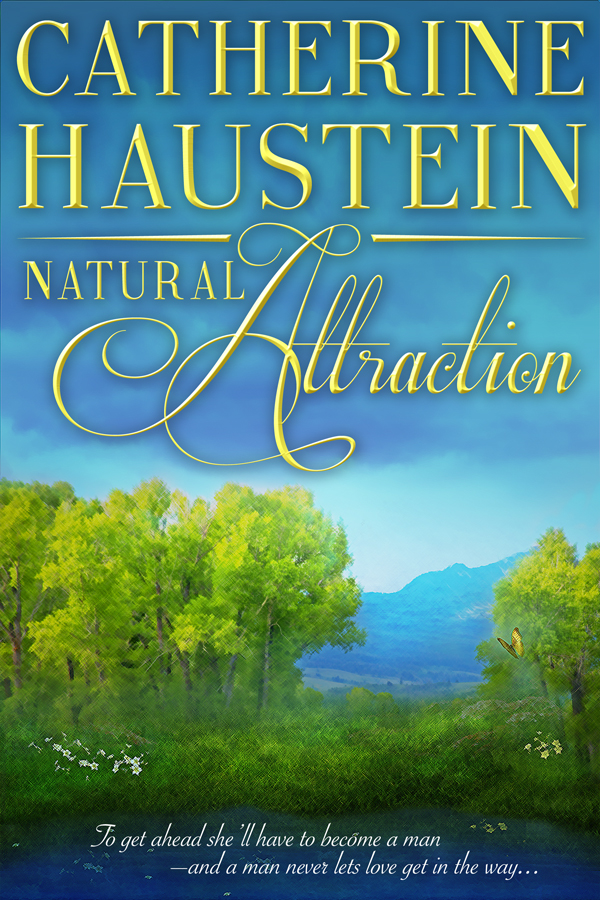
Catherine Haustein is the author of Natural Attraction, a Victorian Scifi Romance.


All views expressed in this post are those of the author, Catherine Haustein, and don't necessarily reflect that of the Brigade.


Monday, September 7, 2015

Congrats to our Brigaders - #winners & #finalists

It's been a good show for Brigade members in contests this year. So with huge thanks to Lea Kirk who compiled the details, here's a comprehensive lists of our latest winners and finalists. To the winners, congrats! To the finalists, congrats and good luck in the finals!


The Maggie

*Janet Halpin Finalist in Paranormal

The Molly

* Kathrine Matzen Finalist in Para/TT/Futuristic

Pages From the Heart

* Colleen Myers Finalist in Published Paranormal

* Lea Kirk Finalist, 2 entries in Unpublished Paranormal

LERA's Rebecca Contest

* Pippa Jay & Lea Kirk Finalists Paranormal/Speculative/Urban Fantasy Romance (announced 9/1)

LoneStar

* Rosalie Redd, Finalist Paranormal. Results not up yet. (announced 9/2)

Indiana Golden Opportunity

* Janet Halpin Finalist in YA. Results not up yet. (announced 9/3)

PRISM (ended)

* Anna Hackett co-Winner with Cheryl Brooks in Futuristic

* Nina Croft 3rd place Futuristic

* Misa Buckley Winner in Novella

On the Far Side (ended)

* Janet Halpin won first in Romantic Elements, and first in TT/Steampunk with Paranormal Elements.

* Lea Kirk 2nd place Romantic Elements

* Evelyn Berry 3rd place in Hard SF/SF/Futuristic

* Rosalie Redd 2nd place in Dark/Light/General Paranormal. (aliens on Earth.)

Wednesday, September 2, 2015

Writing Romance: the Past and the Future


by Carmen Webster Buxton

Disclaimer: This post is my own opinion, and in no way represents the views of the Science Fiction Romance Brigade.

I write science fiction and fantasy, and all my books have at least a love story subplot, and some are as much romance as they are science fiction. But when it comes to reading, I also enjoy historical romance. To me, there's a lot in common between historical and science fiction romance.

What appeals to me in reading historical romance is that the characters act in an unfamiliar framework. Regency England and 16th century Scotland and colonial America had very different rules of behavior when compared to modern times, especially for women. Of course, a plucky heroine may well break those rules, but a good historical romance makes it clear what the rules are when the heroine breaks them. Georgette Heyer is my all time favorite author for historicals, and she was a master at making characters fit their time period, but still keep them relatable for modern readers. In Faro's Daughter, for example, the heroine works in a gaming house to help support her family, and it's made plain this puts her beyond the pale in society.

The appeal for me, in writing science fiction romance, is that I get to make the actual rules! In my novel Shades of Empire, one of the characters is a merchant ship captain who sleeps her way through the crew. Clearly, the pale has moved in my version of the far future.

In other books, I set the story on a world that was colonized by prisoners (Tribes) and by patriarchal religious fanatics (Saronna's Gift). And in each world, I create a society with its own set of rules that exists nowhere except in my book.

Creating societies also means I can play around with gender roles, or the lack of them, and have characters from very different backgrounds and cultures interacting. In Tribes, I wrote a "slave and warrior story," but the man is the slave and the woman is the warrior. That kind of gender switch is a lot harder to do in historical romance. Even Georgette Heyer settled for cross-dressing disguises of necessity, as in The Masqueraders.

And of course, when attraction happens across cultures, that's when the fun begins. Think about how hard dating is when the couple shares values and backgrounds; then think what it would be like for two people who can't even tell whether the other person likes them or not. And this assumes their cultures both allow dating. What if one does and the other doesn't?

I suppose someday I might try my hand at writing a historical, but it would be difficult for me to give up the freedom that writing in a far-future setting offers. Luckily, there is no law that says I have to read only the genre I write.


Bio:

Carmen Webster Buxton was born in Honolulu and experienced a childhood on the move, as her father was in the US Navy. She has been a librarian, a teacher, a project manager, a wife, and a mother, although not in that order.  She now lives in Maryland with her husband and a buff-colored cat with the unlikely name of Carbomb. 


Facebook: https://www.facebook.com/carmenwebster.buxton


Latest release: Saronna's Gift


US Kindle store (also available at other Kindle stores) and Amazon paperback
Barnes & Noble (paperback and Nook book)

SFR Brigade Bases of Operation