Showing posts with label Natural Attraction. Show all posts

Tuesday, October 6, 2015

Favorite Science Hook Up: Tesla and the AC/DC Debate


by Catherine Haustein
 
Enigmatic, compulsive, afraid of germs and probably sex too, Nikola Tesla is an odd choice for a scientist hook-up, but that’s who won my “who would you date?” blog questionnaire. Tesla, as many recall, was a pioneer of electricity, inventing the AC motor. Shy and detail oriented, he first worked for Thomas Edison and then for George Westinghouse, who sided with Tesla in the AC/DC debate.

Some fun facts about Tesla:

  1. He perhaps never touched a woman but he was romantic. He loved the power and beauty of water, lightning, and rain. He moved to Colorado and treasured its lightning storms as he longed to harness electricity.

  2. Yes, electricity was his first and only love, but some women did enter his life. Katherine Johnson, the wife of a friend, was his platonic lover. Pianist Marguerite Merington, Anne Morgan, a mysterious Anna and perhaps a few other women were associated with him. However, many say that he took a vow of celibacy in order to devote himself to his work. He was not a fan of woman’s rights. He thought that women were smarter then men and might take over the world and forget to be mothers. Do you really want a boyfriend like that?

  3. He once was attracted to a man, Richmond Pearson Hobson, but being a good Victorian, quickly dismissed that notion and was Hobson’s best man instead.

  4. The AC/DC battle was gruesome. Even Lord Kelvin (of absolute zero fame) didn’t support alternating current. Thomas Edison was so jangled by the idea of AC current that he collaborated with Harold Brown, employed by Edison to promote an electric pen/stenciling device, to rally public opinion against it. Under-educated Brown did all he could to scare people away from AC current, including electrocuting hapless dogs—44 in total—to demonstrate its dangers A circus elephant named Topsy who killed three handlers, was electrocuted with AC current and some cyanide carrots. Brown pushed AC current as a death penalty alternative to hanging. The first execution by electrocution was barbaric.

  5. Tesla responded to the brutal animal torture (it took many trials to kill the animals and was extremely cruel) with public displays of high-frequency AC current passing over his skin, in what could be called the first bedazzling ever.

  6. Niagara Falls was one of his first loves and greatest successes. Long taken with the force and beauty of the majestic waterfall, Tesla and Westinghouse harnessed it with generators that powered Buffalo, New York in 1895. Later, this power would build the city of Detroit.

  7. Telsa received posthumous credit for inventing the radio.

  8. If you get that date, don’t wear jewelry. He disliked jewelry not only on women but on himself. He never even wore a tiepin.

  9. Tesla might not have been much fun on a date. He didn’t eat much and was obsessed with pigeons.

The bottom line: for a fun ride, a Tesla car would get you there faster than the man. If you want a handsome and quirky companion, Tesla is your guy. Eat before hand and don’t plan a second date.

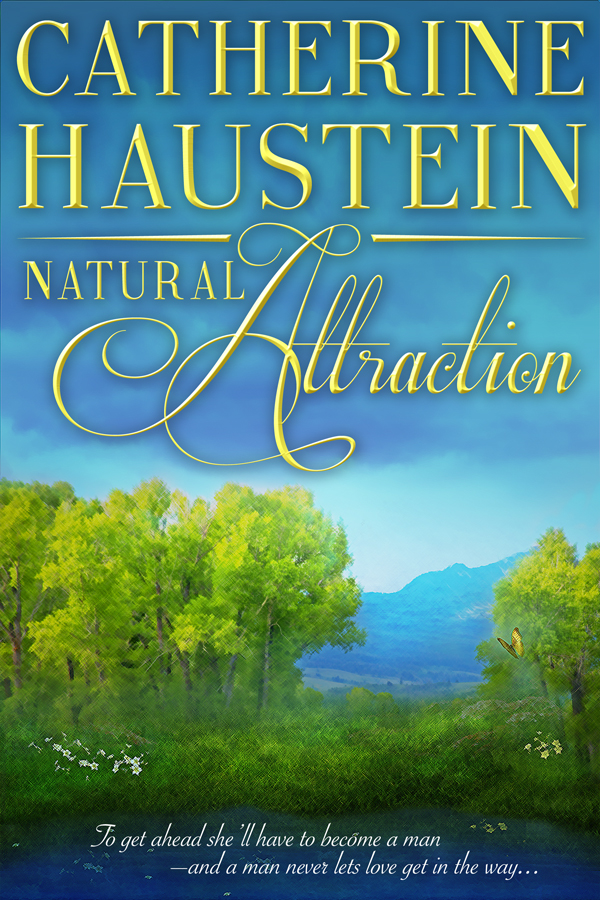
Catherine Haustein is the author of Natural Attraction, a Victorian Scifi Romance. Available on Amazon, Barnes and Noble, iBooks, and Kobo.


Views expressed in this post are those of Catherine Haustein and don't necessarily reflect that of the SFR Brigade.

Tuesday, September 8, 2015

Fictional Female Scientists: Do reader expectations meet reality?

by Catherine Haustein


If you ask readers what they require from a fictional scientist they’ll say she should first of all be a problem solver, bursting with intelligence and curiosity. What does it take to craft a multidimensional, realistic female scientist?

I surveyed female scientists about their defining traits and two rose to the top: passion and curiosity. They had these suggestions as well.


  1. Passion runs more deeply than just for science. She’s likely to be multidimensional. The scientist will most likely be passionate about life in general so give her a side interest. Many scientists like the arts, enjoy working with their hands, and find similarities between the lab and the studio. Others enjoy sports and fitness. She likes to defy expectations.
  2. Scientists combine passion and compassion. They see science as being a not just fascinating but a benefit to society.
  3. Balancing career and family is an important aspect of a female scientist’s life. Scientists would love to see more fictional characters who have kid and to an extent, so would readers. Don’t be afraid to make her life way more complicated by adding family to the mix. Studies have shown that motherhood enhances problem solving ability.
  4. Readers are correct--problem solving is essential to scientists, but keep in mind that a scientist today will be highly specialized. She won’t know everything. She’s more likely to work as part of a team, too.
  5. She’s overcome a lot to get where she is. Prejudice, harassment, exclusion-- these women are tenacious and they do overcome, often by cultivating a healthy sense of humor.
  6. Yes, she was a good student. Intelligence is a common trait among scientists. But it takes more than smarts to be a scientist. She probably had something driving her--the need to please a parent, to prove herself, or to overcome poverty or prejudice.
  7. She might have her favorite jargon and readers expect it. Scientists have their words. It’s part of being in the club. But there’s an even better reason for science speak—it’s precise. Why say carbohydrate when you can say maltodextrin?
  8. Yes, it’s true. Scientists fix things with duct tape and paper clips or a twist of copper wire. Scientists don’t mind improvising. And they like their scientific equipment.
  9. Power suit? It’s a lab coat. Studies have shown that those white coats make people perform better and make fewer errors.
  10. Under scrutiny. Peer review means that her work is critiqued by other scientists—a humbling experience and one that will keep her honest.
  11. Yes, she will be curious and find wonder in the natural world. Isaac Newton said that being a scientist is like picking up pebbles and shells on a beach beside the “vast ocean of truth”. Your scientist should be always questioning, always curious, with one foot in the future, her eyes on the stars or peeking through a microscope, and her passionate heart here on earth.


A version of this post first appeared here.

 
Catherine Haustein is the author of Natural Attraction, a Victorian Scifi Romance.


All views expressed in this post are those of the author, Catherine Haustein, and don't necessarily reflect that of the Brigade.


SFR Brigade Bases of Operation