Tuesday, December 9, 2014

Recap of PhilCon - Guest Post by TK Anthony

L to R: Alex Shvartsman; Berakha Lana Guggenheim; Robert C. Roman; Steve Miller; Brian Thomas; Lee Gilliland

First held in 1936, The Philadelphia Science Fiction Convention is the oldest in the nation, and arguably, the world. According to Wikipedia, our Friends Across the Pond claim that distinction, because the first UK SF convention in 1937 was less ad hoc and more organized. As an upstart colonial, I will point out that the first PhilCon had a chairman, a secretary, discussions of SF, parties, filk, and gaming--although the gaming was craps. Seventy-eight years later, many of those same elements filled this year's schedule.

It's been a while since I've been to an SF convention--not since Lois McMaster Bujold was guest of honor at Boskone sometime in the early 2000s.  I'd forgotten how much fun they were. Part of the fun is going with the right people. In this case, two of my sisters, one of whom was celebrating her 29th birthday (that's her story and I'm sticking to it). All three of us managed to clear our schedules so we could arrive on Thursday night. The weather was cold (especially for this Texas transplant), so we decided that, having checked into the conference hotel, we would just eat dinner there. The waiter led us back to our table. And at the next table sat...

Sharon Lee and Steve Miller. (Pause here for total fangirl moment.) I've been a fan of Lee & Miller since maybe 15 minutes after they published their first book, Agent of Change, back in 1988. I quashed my first inclination to jump up and down, screaming and pointing. And really, there was no need. My sisters knew exactly who they were.

Not wanting to scare PhilCon's principal speakers running into the frigid night, we played it cool. Yeah. Cool. Until finally I leaned forward and said something on the order of, "I don't mean to intrude...but, we're fans."

Sharon and Steve were all that is gracious, and thus ensued an hour's lively conversation. We chatted about everything from deleting scenes to improve the story's flow; our favorite childhood books; the emotional challenge of weeding one's library; to "Swifties." (For the uninitiated, "Swifties" are based on the writing style of the Tom Swift books. As in: "Look, there's a bridge!" said Tom archly. "There's a pop quiz today," said Tom testily.) I think I mostly managed not to stutter in awe. Truth said, I could've gotten up from the table and gone home, and the trip to Philly would've still been worth it.

Because of commitments on Sunday, I only had two days to spend at PhilCon. After stuffing some fliers for my books in Filthy Pierre's SF Info rack--which travels with the owner from con to con--I made the most of my time, attending several interesting panels. Some of the standouts included:

How to Set Up a Crowdsourcing Project gave attendees the benefit of the real-lfe experience of the panelists. Critical elements of success include: Backers need to be confident in your professionalism and transparency. If you just can't do a video, then do a slide-show with voice-over. Calculate your costs carefully, and show how their support matters. Use social media to promote your campaign; Twitter casts a wider net than Facebook. Think creatively about donor rewards and stretch goals--and keep it simple. (No apparel! You don't need the headache of managing sizes, shipping, and storage.) People want to feel appreciated, and involved. (Sometimes, it's as simple as listing their names on a thank you page in your next book.) Panelists: Danielle Ackley-McPhail (mod); Rob Balder; Neil Clarke; Gil Cnaan; Alex Shvartsman; Alyce Wilson.

In the session Does Science Fiction Need to Lighten Up? it took a little while for the panelists to decide what their topic really meant. Some thought it meant we needed more humor in SF. Others thought both authors and readers needed to stop bringing today's social agendas into every story; the story matters more than agenda checkboxes. Everyone seemed to agree that casting evil nastiness in a positive light is a good thing to avoid. Some elements of SF seem to be going toward a darker literary approach, while others are reviving the best traditions of SF as genre fiction. The panel discussion also touched on the role of YA in building the fandom. Steve Miller, bringing 40 years' of commercial writing to the table, asked what SF had to offer the 10-15 year-olds to bring them into the genre, building our future fandom. (Or, as my sister the librarian put it..."Where's the SF gateway drugs?") Panelists: Alex Shvartsman (mod); Brian Thomas; Berakha Lana Guggenheim; Steve Miller; Robert C. Roman; Lee Gilliland.


Side note: One of my writing buddies, Robert C. Roman, was on this panel--a nice surprise. Bob and I met online about seven years ago, critting each other's stories on Baen's Bar, and have kept in touch at least sporadically ever since. This was the first time we ever met in person. Which is exactly why people attend cons. 

The panelists on Building Believable Relationships in SF offered some stellar advice. Portray emotional truth, so that your reader can find something that resonates with them. Be sure to show them emotional consequences to give them a reason to care. And an interesting insight: Your culture is actually the main character in your book, because your characters exist in a cultural context, and whether they swim with current or against it, they are an expression of their culture. Panelists: Gregory Frost (mod); Rob Balder; Meredith Schwartz; Anastasia Klimchynskaya; Gail Z. Martin; Sharon Lee.

In their principal speech, Lee and Miller outlined the choices that had led them to become first writers, then writing partners, generally eschewing opportunities to rise in the ranks of more traditional employment--no matter how many times the opportunity presented itself-- in order to do what they truly enjoyed doing: building worlds and creating the characters who populate them. Characters and worlds they love, and so their readers...in a total fangirl/fanboy fashion.

In the time since the first PhilCon, the publishing industry has endured dramatic changes. Books went from hardback to pulp to ebook. As Sharon and Steve reviewed a lifetime of decisions that had led to them to the role of principal speakers at the 78th PhilCon, I was struck by the realization that no matter how the industry changes, or the genre changes, the bond between author and reader remains essentially the same: the story that touches our minds and hearts in a shared experience.     
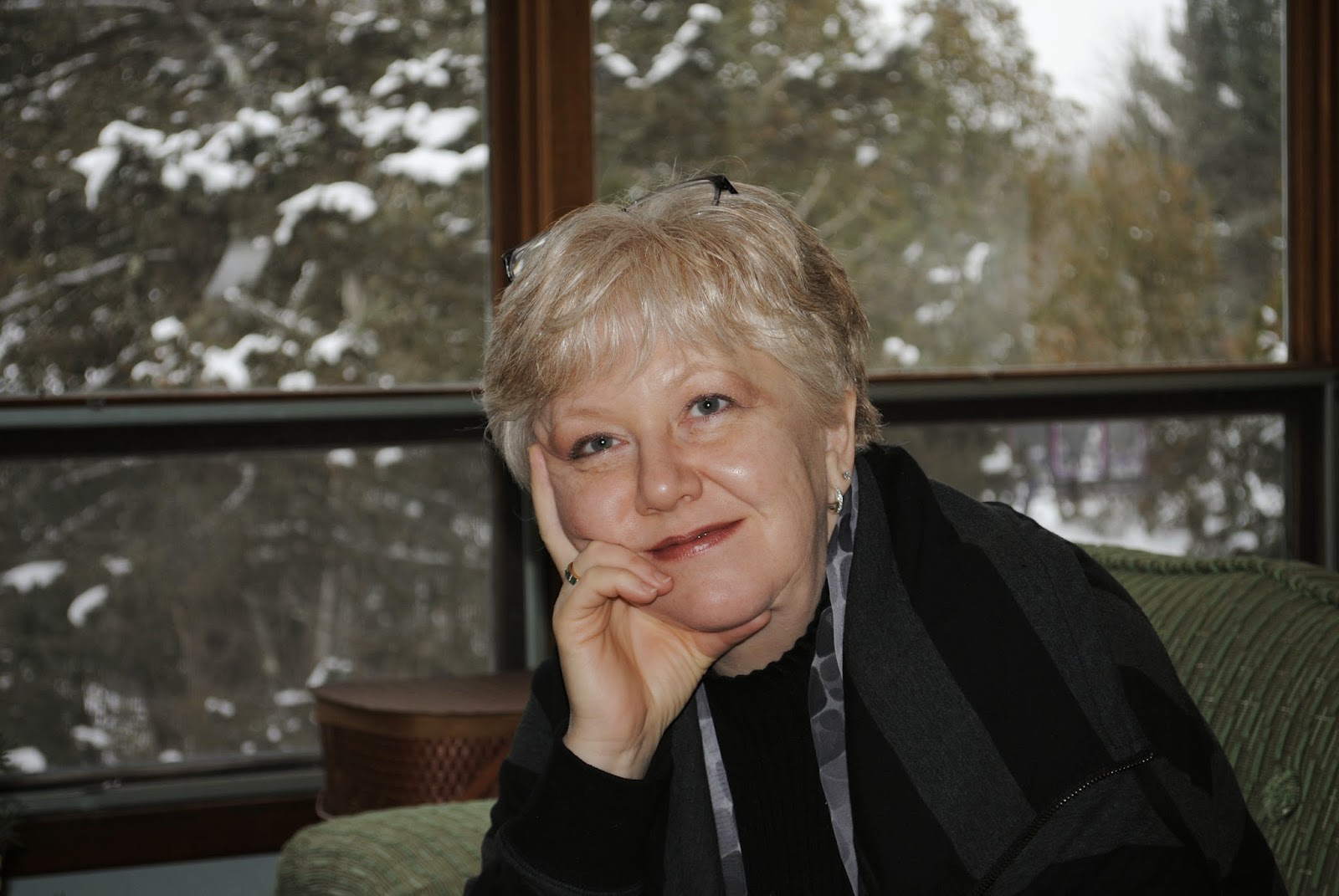


Bio:

Warped in childhood by too much reading, T.K. Anthony made her living in the world of words, spending two years on Capitol Hill as a press secretary before moving on to Corporate America in business communications and human resources.
She grew up in Pennsylvania, has lived in Illinois, Virginia, Upstate and Central New York, and Massachusetts, and has seen much of the United States by road trip, visiting a whole raft of cousins. Travel outside the US includes Canada, Scotland, England, Italy, France, Belgium, and Spain. With her travel bag packed, she now resides in Texas with her husband, two cats (Pip and Taz are close collaborators in her writing, and keep her keyboard furry), and all the people in her head who talk to her.
She loves to talk to other people, too–so leave a comment, or send her an email at tesskanthony AT gmail DOT com.

Blurb:
Warned by a Seeing… 

The high king of the Scotian Realm expects the arrival of an enemy, a race of psychic predators bent on galactic conquest. The Realm’s one hope is alliance with the neighboring star domains in defense of a shared colony, Forge. 

Caught in Fate’s grim weaving… 

Mindblind, amnesic, Tazhret lives out his drug-induced visions of servitude on Forge. He wants to believe the beautiful woman with the nut-brown hair who whispers reassurances to his harrowed heart: “You have a name.” But is she even real? Or just one bright thread in his dark dreams? 

An unexpected hope… 

Tazhret’s destiny leads him to freedom and the woman he yearns for—and to a desperate struggle against the enemy. 

Tazhret can save Forge, and his beloved. But only at the cost of all he has gained: his name, his freedom, and his love.


Buy links for Forge: 

Barnes & Noble - http://bit.ly/1uEXVdi
Decadent Publishing - http://bit.ly/1AeiUXv
Smashwords - http://bit.ly/1xMPoom

Twitter:       @TK_Anthony_
website:      www.scotianrealm.com

Monday, December 8, 2014

Meet the #Author Monday - Kate Corcino


Please tell us a bit about yourself: I was raised as an “Army brat” and grew up moving every two to three years. I think that lifestyle had a huge impact on me, as the need to learn to adapt and to read people was learned very early. It also made me a bit of a nomad. Professionally, I moved around, too. I was a legal videographer, a middle and high school teacher, a cheerleading coach, a law student. Through it all, I wrote poetry as catharsis and started but never finished many stories. After I left school, I realized it was time to get serious about the one constant through it all, my writing. I did, and the results are Spark Rising and Ignition Point.

Tell us about Spark Rising: Spark Rising is a romantic, post-apocalyptic adventure set in the southwestern United States of the future. It’s the story of Magdalena Gracey, a young woman with the power to create and manipulate the only form of electricity left in the world, and Agent Alejandro Reyes, a man trained from childhood to be an elite soldier for the ruling government. He’s sent to investigate a report of an illegal Spark living in the desert. But Alex has his own agenda. And if the two of them can learn to work together instead of killing each other, they might have a chance at sparking a revolution…and love.


What inspired you to write this particular story?: I’d seen several images that fired my imagination—a photo set of what the skies over major cities would look like if there were no lights, pictures of desert sand overtaking an abandoned town. But I originally sat down to continue writing an old story, a fantasy. When I began, Lena and Alex started telling me their story instead. They were just there, fully formed and very vocal. I couldn’t very well tell them to shush!

Please share a favourite snippet from your book: One of my favorite scenes comes when Lena and Alex are finally alone, and he’s asked her to help him learn how to do some of the things with the Spark ability that he’s struggled to master. It’s the moment immediately before their first kiss.

She stood with her arms crossed, waiting.
He focused, grateful for the shift in mood. Instead of trying to affect the Dust inside the body, as she did in her attacks, he’d try for the Dust attracted to the outside of her. Perhaps the Dust living inside was simply too protective of their very strong host? He breathed out and reached with his mind.
Nothing happened, exactly like all the times before.
“Um.” She wrinkled her brow. “Did you start yet?”
Alex groaned in frustration. He dropped his gaze to the ground at her feet, not wanting to see her expression after the latest failure. Push, dammit!
A flash of light and heat arced out in jagged white light from the ground. It threw Lena off her feet, over the bench and to the ground.
He stared, slack-jawed for a bare second. In two long steps he crossed the clearing and hopped onto the bench looking down at her.
She wheezed in an attempt to reclaim her breath.
He jumped down to her side, hands moving over her head and neck, and then down her sides, to be sure she was otherwise okay. She projected such a huge persona he was shocked at how fragile she felt under his hands.
She batted at him weakly.
Once he’d reassured himself she wasn’t broken, he wrapped his hands around each of her thighs and pulled up her legs to inspect her feet.
The indignity of it helped her find her voice. “Get off of me!”
“Lay still! I could have hurt you!” He barked the words, guilt and dismay making his voice harsh.
“Reyes. Alex. I’m fine.”
He propped one elbow on his knee in front of him and rubbed his mouth with the back of his hand. “Dust, Lena. I could have hurt you.”
“Yeah.” She agreed. “You could have.” Her voice changed, and he could hear the sly grin under her words. “You really could have.”
The mischief on her face was contagious.
“I did it.”
“You did something.” She wiggled a bit and then made a move to rise.
He jumped to his feet to help. His pull and her slight weight made her sail up into his side. He wrapped his arm around her to steady her.
She grinned up at him, mouth opened to make another wise-ass remark, no doubt.
He focused on her mouth just a beat too long.
She stared back up at him, her eyes wide and her body very still. Before Alex had a chance to process the movement or talk himself down, his body shifted, turning to fully face her. He slid his other hand up to cup the back of her head, lifting her face as he lowered his.
Just a taste. One taste. I have to know.


Which comes first for you – a character's looks, personality or name?: With these two, it seemed that they came to me ready to go. All three elements were there from the start. But if I had to choose one, it would have to be personality. They were very much alive, and they had attitudes.

Any tips for aspiring authors?: Everyone has a well of creativity inside of them. Figure out, as soon as you can, what it is that refills your well. I think that what we call “writer’s block” or the inability to finish is rooted in pulling too much up from that well without refilling it. We sit down and bang away and then when the well empties and the words and ideas stop flowing, we despair, thinking the story is broken—or we are. Instead, take a step back, go do whatever it is that feeds your soul—for me, it’s reading particular authors or driving aimlessly through the desert. Refill your well. Then come back and write.

Questions for fun:
What super-power would you choose?: The ability to heal others. Or flight.

Coffee, tea or wine?: Ooooh, tough one! I’d say coffee, chased by wine.

What is your favourite book? (aside from one of your own!): Dragonflight, by Anne McCaffrey.

Favourite genre and why?: Speculative fiction. It keeps me most rooted in the magical childhood mindset that anything is possible, if we only believe. That’s why it goes so well with romance!

Favourite colour?: Red. Or purple. Or brilliant, lapis blue. Hmm, I’m not very good at narrowing things down to just one, am I?

Upcoming news and plans for the future?: Spark Rising releases on December 15, 2014, which is amazing and consuming! I’m currently working on its sequel, as well as another collection of related short stories, similar to Ignition Point, that take up the stories of secondary characters. The collection will release before the sequel.

Thank you so much for taking the time to talk to us!

Thank YOU! I hope everyone has a wonderful holiday season!

In lieu of preorders for Spark Rising, through 12/14/14, I’d be delighted to offer a free review copy e-ARC of Spark Rising to those interested. Please contact me at katiecorcino@gmail.com with your preferred format. Thank you!
(psst, I gave this book a five star rating AND a review quote because it's THAT awesome! ~Pippa Jay)

Blurb for Spark Rising
All that’s required to ignite a revolution is a single spark rising.
Two hundred years after the cataclysm that annihilated fossil fuels, Sparks keep electricity flowing through their control of energy-giving Dust. The Council of Nine rebuilt civilization on the backs of Sparks, offering citizens a comfortable life in a relo-city in exchange for power, particularly over the children able to fuel the future. The strongest of the boys are taken as Wards and raised to become elite agents, the Council’s enforcers and spies. Strong girls—those who could advance the rapidly-evolving matrilineal power—don’t exist. Not according to the Council.
Lena Gracey died as a child, mourned publicly by parents desperate to keep her from the Council. She was raised in hiding until she fled the relo-city for solitary freedom in the desert. Lena lives off the grid, selling her power on the black market.
Agent Alex Reyes was honed into a calculating weapon at the Ward School to do the Council’s dirty work. But Alex lives a double life. He’s leading the next generation of agents in a secret revolution to destroy those in power from within.
The life Lena built to escape her past ends the day Alex arrives looking for a renegade Spark.

Biography
Kate Corcino is a reformed shy girl who found her voice (and uses it...a lot). She believes in magic, coffee, Starburst candies, genre fiction, descriptive profanity, and cackling over wine with good friends. She’s been a legal videographer, a teacher, and a law student, and believes in chasing dreams. She also believes in the transformative power of screwing up and second chances. Cheers to works-in-progress of the literary and lifelong variety!

She is currently gearing up for the dual releases of Ignition Point and Spark Rising, the first books in the Progenitor Saga, a near future post-apocalyptic dystopian adventure series with romantic elements, science, magic, and plenty of action.
She lives in her beloved desert in the southwestern United States with her husband, several children, three dogs, two cats, and a fat, happy guinea pig.
Contact Information
Social Media:   

Thursday, December 4, 2014

SFRB Recommends #29 - Erasure by Misa Buckley #mm #gaylit #LGBTLit #scifirom

Book Description:

When Malik Foster crashes back into his life after a three year absence, Damaris wants nothing to do with his ex-lover. Especially once he learns that Malik has cybernetic implants – something made illegal by the Restoration. Dam does not want a Purity Squad beating down his door. Yet neither does he want to leave Malik to their less than tender mercies. He agrees to use his surgical talents to remove the tell-tale tattoo that’s been branded on to Malik’s wrist.

As they reignite their past relationship, Dam learns about the life Malik has led since the Restoration came into power. He has to face the fact that his future as a plastic surgeon is increasingly insecure in a city that’s becoming ever more obsessed with “natural” bodies. Then the Purity Squads come looking for Malik, and they know an escape is now or never.

But can there be an escape from a regime that wants to erase anyone not falling into their definition of human?


My thoughts:

If you're a newbie to m/m romance (like me) and/or a newcomer to scifi romance as a genre, this is a great place to start. Tight world building that won't overwhelm even the least technically minded, well done sex scenes, well balanced conflict and tension between the two characters, and emotionally satisfying. Be warned though - this is a short story, not a novella or novel.

Amazon US $2.99

Author site: Misa Buckley | Author of Scifi Romance

Tuesday, December 2, 2014

Disability In SF - Taking A Different Approach


Perhaps I'm not the best qualified person to tackle this subject, but it's one that I've thought about a lot this year. I see the constant calls for diversity in fiction, and especially in science fiction. Not enough PoC characters, disability not being considered, not enough gender equality, variety etc. But here's why I struggle with disabilities in my own stories.

In October this year, a man left paralyzed from the chest down was able to walk again (albeit on crutches) using cells taken from his own nose to regrow nerves in his spine. 3D printing has enabled the creation of an artificial spine. I watched a medical show involving a man who had his windpipe damaged in a car crash that left him unable to speak and forced to breathe through a hole in his chest for seven years. After radical, experimental surgery and using an artificial windpipe scaffold with some of his own body cells grown on it, he woke up immediately able to speak and breathe through his mouth. A woman has given birth after having a womb transplant from a donor.

Since I write far future SFR, the fact that we are already able to perform such medical miracles right now makes it hard for me to imagine ANY disabilities existing in my worlds, though they still could. Of course, not all the civilizations are as advanced in my universe, so there are opportunities. But those don't tend to be the focus of my stories so far. So perhaps I need to consider that the whole concept or definition of disability itself will have to change in my stories.


An example is the Earth Girl trilogy of YA SF written by Janet Edwards and published by Pyr in the US (my eldest is a huge fan). In these books, the heroine is considered disabled because a problem in her immune system means she can't travel from planet to planet and has to remain on Earth. This makes her a freak in the current society.

I also have a WIP with a heroine who has a similar issue. After breaking her neck which in present day would have left her paraplegic, my heroine's own body rejects attempts to regrow her spine or repair it using stem cells, and she's forced to have a cybernetic replacement. While this actually enhances her abilities in some ways, it makes her a medical liability due to the additional costs and difficulties of providing her with full medical care and repairs (something that must be paid for and supplied by her employer). So the ability to fix and/or prevent leaving her with one disability creates a whole new one.

Of course, current advances in medical science don't necessarily mean we'll be able to fix every form of disability, or that curing it might not have side effects or create other issues such as ethical or religious conflicts, for example. Any ST:NG fan will be familiar with Geordi's blindness and how the writers tackled that throughout the series, including how losing his visor caused major problems, and how an offer to cure his blindness by the Q was used to tempt him. In Neal Asher's The Technician (heavy, far future SF) one character is autistic (autism also runs in my family, so it's something I'm familiar with but don't write for personal reasons. I'm just as guilty of not writing disability into my stories). In X-Men: Days of Future Past, Xavier is taking a drug that enables him to walk but costs him his telepathy (though at the start of the story, he's actually glad to lose his powers). And if you're looking for a story where physical disability is dealt with very well, I suggest you read Tin Cat by Misa Buckley (and here, the hero is curious about the heroine's disability as he's come from a future time where it's curable/repairable). There are many reasons why someone might chose not to accept medical help. I vaguely remember an episode of Babylon 5 where parents refused to let their son undergo life-changing surgery because it went against their religious beliefs to pierce the body, despite the fact their son would otherwise die. The doctor disagreed, went ahead, and was devastated to discover the parents had euthanised their child because of his actions.


Yes, there should be more stories featuring disabilities, and even disabled heroes/heroines. But if you are uncomfortable to write them, or concerned that even with research that you could get it wrong, perhaps it's a good idea to think about what a disability in the far future might be when we are already on the brink of being medically able to do so much more.

With thanks to my daughter for the information on Earth Girl.


Bio:

After spending twelve years working as an Analytical Chemist in a Metals and Minerals laboratory, Pippa Jay is now a stay-at-home mum who writes scifi and the supernatural. Somewhere along the way a touch of romance crept into her work and refused to leave. In between torturing her plethora of characters, she spends the odd free moment playing guitar very badly, punishing herself with freestyle street dance, and studying the Dark Side of the Force. Although happily settled in the historical town of Colchester in the UK with her husband of 21 years and three little monsters, she continues to roam the rest of the Universe in her head.


Pippa Jay is a dedicated member of the Science Fiction Romance Brigade, blogging at Spacefreighters Lounge, Adventures in Scifi, and Romancing the Genres. Her works include YA and adult scifi, scifi romance, and paranormal titles, and she’s one of eight authors included in the science fiction romance anthology—Tales from the SFR Brigade. She’s also a double SFR Galaxy Award winner, been a finalist in the Heart of Denver RWA Aspen Gold Contest (3rd place), and the GCC RWA Silken Sands Star Awards (2nd place).

You can stalk her at her website, or at her blog, but without doubt her favorite place to hang around and chat is on Twitter as @pippajaygreenYou can also find her on Facebook, Pinterest, Google+, Goodreads, and Wattpad.

Her latest work is an alternative 1920s superhero romance--When Dark Falls--released 21st November by Breathless Press.
EXCERPT | GOODREADS
Available at... Breathless Press

All Romance eBooks | Bookstrand
Smashwords | Barnes&Noble
Amazon US | Amazon UK
In a city where Dark Technologies Inc. now runs the show, Kadie Williams has more immediate concerns than the fall of Blaze, their guardian superhero. Almost every morning for the last few months she’s woken up with cuts and bruises on her body, and no idea how she got them. There are no nightmares. No evidence that she sleepwalks, or any sign of a break in. And nothing to tell her who’s been cleaning up after her. As just one of thousands of civilians conscripted to slave away in the labs of Professor Dark, she knew there'd be trouble ahead. But she never expected it to be so bad, or so personal.

Desperate for answers, Kadie looks to the new defender of the night, the only person who can hinder the total domination of Professor Dark—Nocturnelle. The mysterious vigilante superhero came from nowhere with her cybernetic sidekick Shadow, set on putting an end to the brutality of Dark's regime. But as his laboratories work on a new secret super-weapon, Nocturnelle and Shadow may not be enough to save Nephopolis...or to save Kadie either.


SFR Brigade Bases of Operation